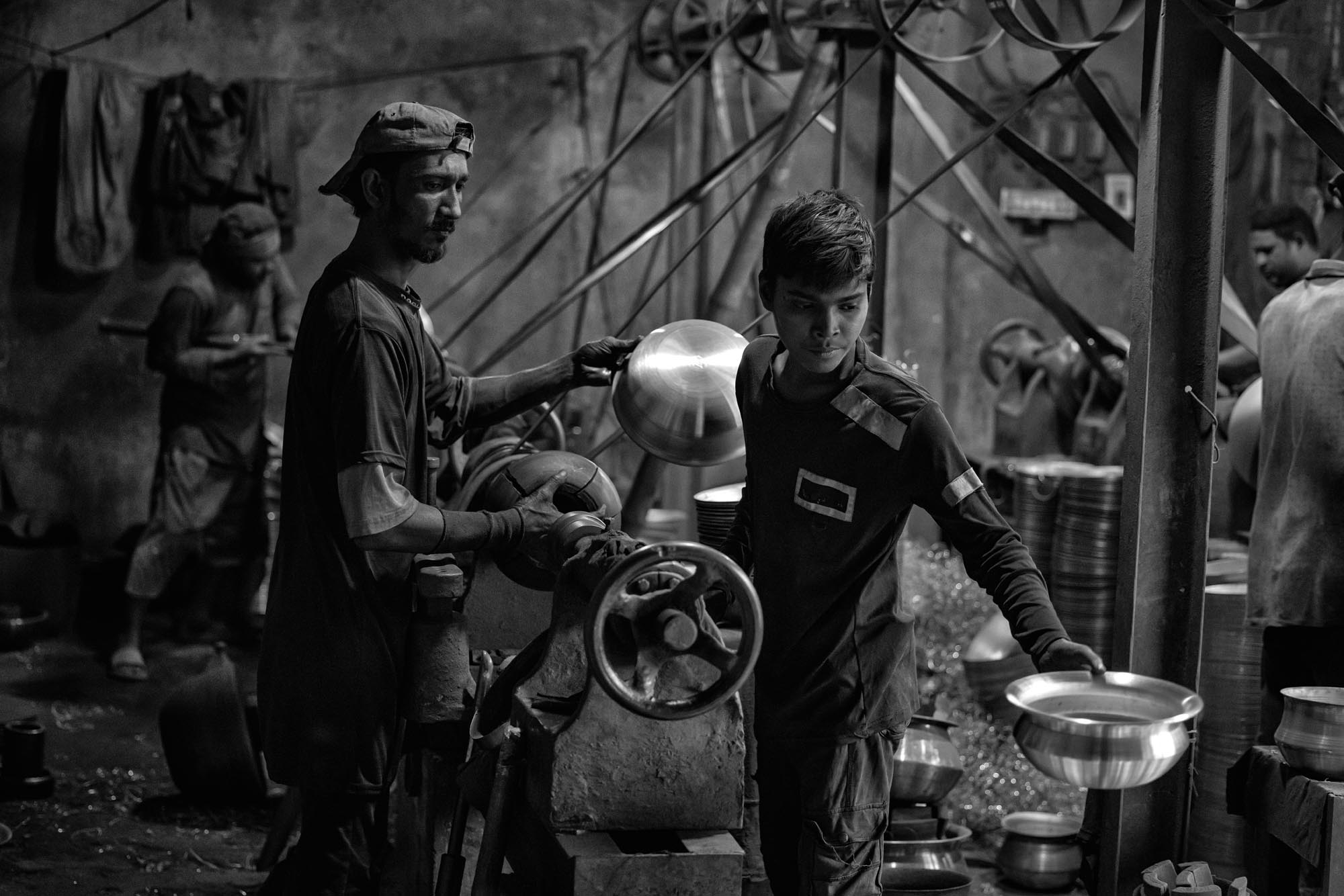
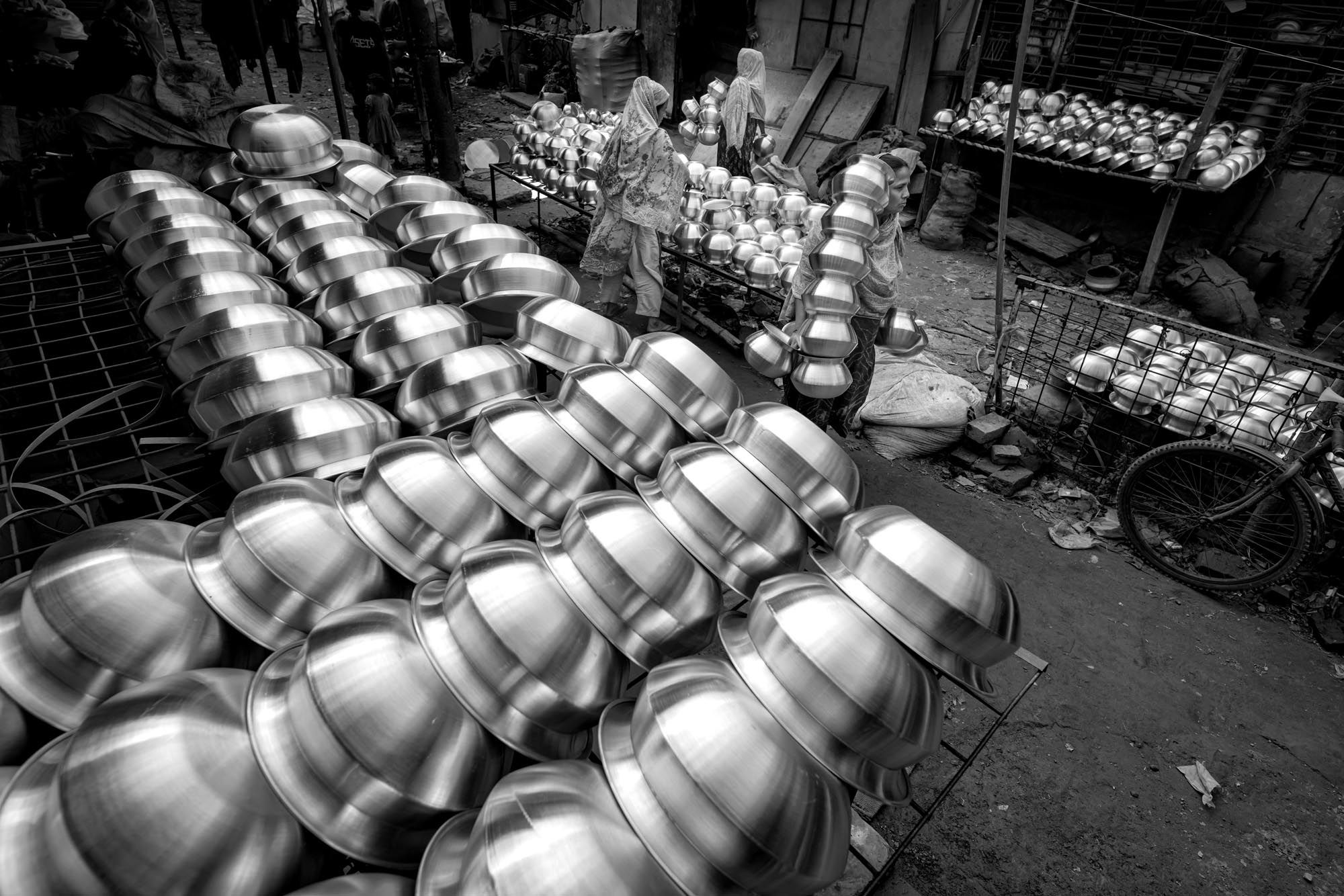
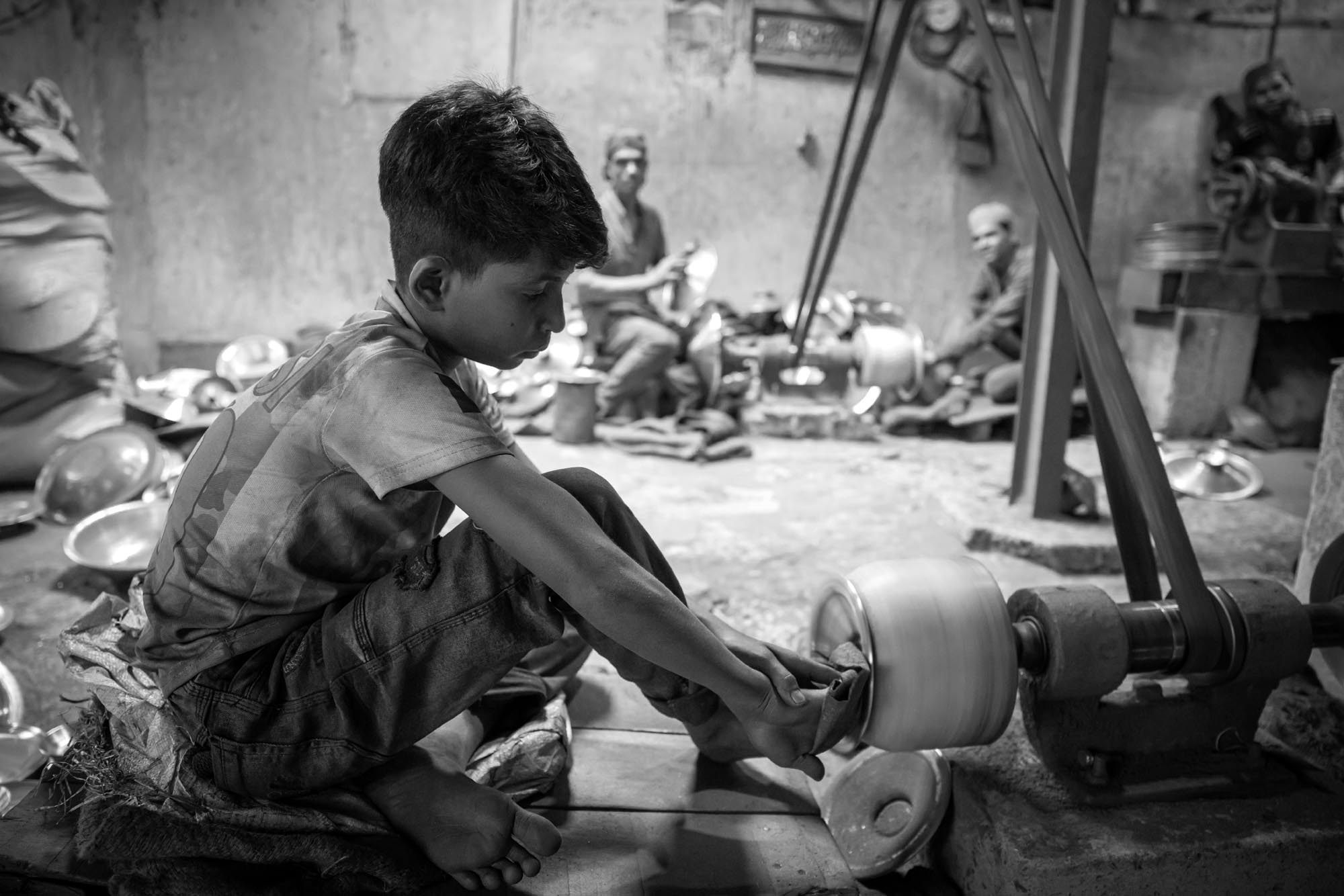
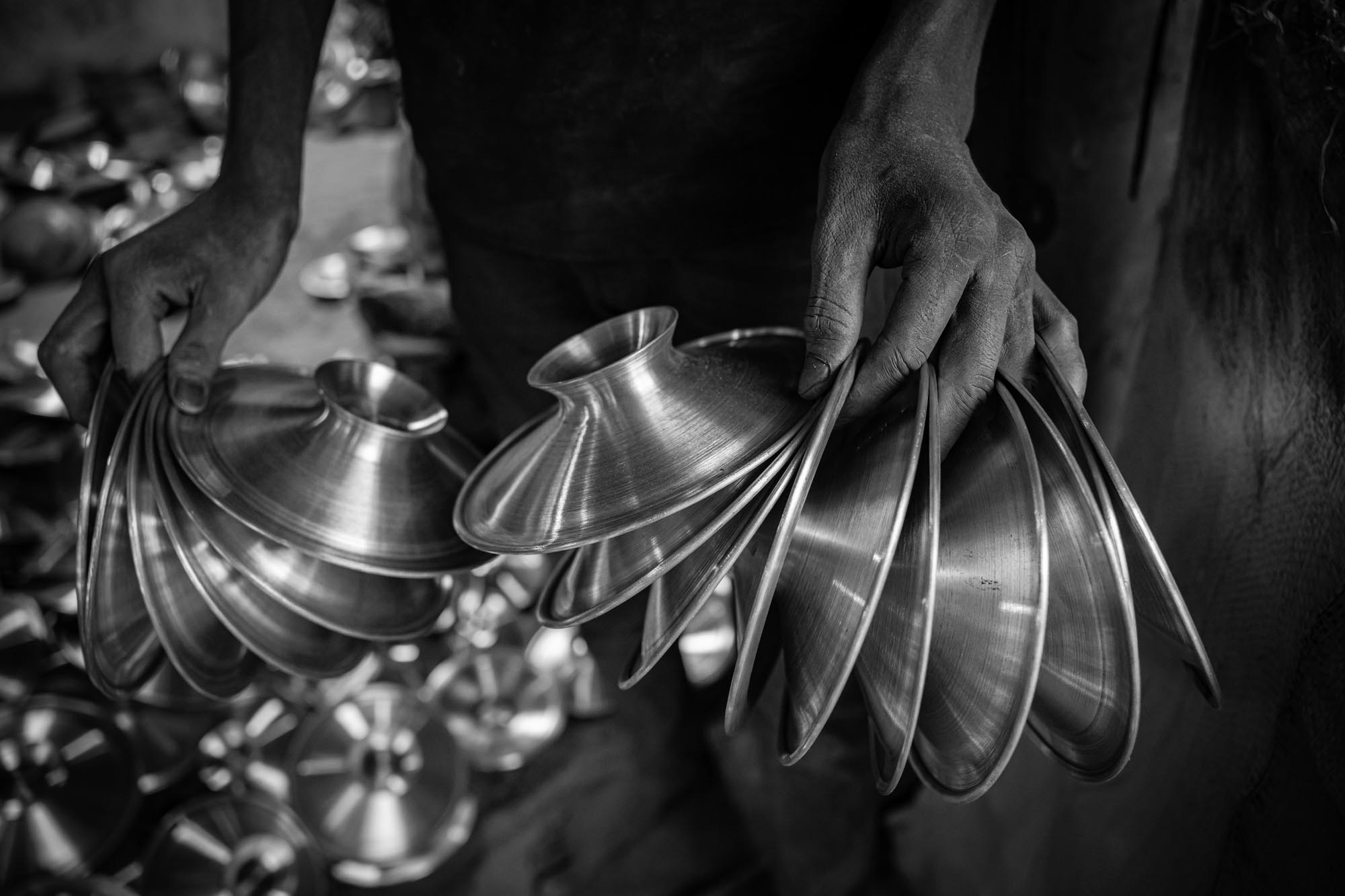
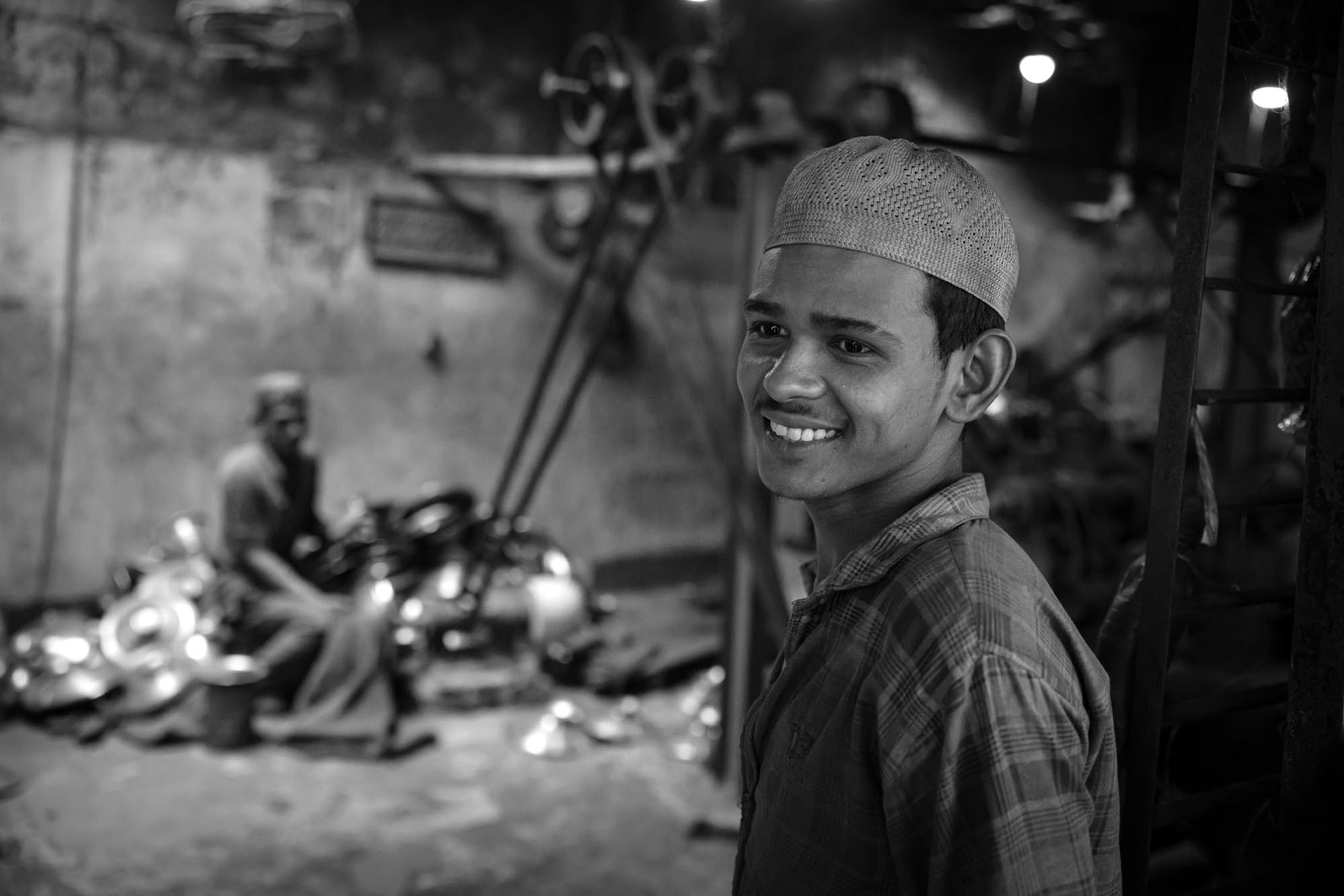
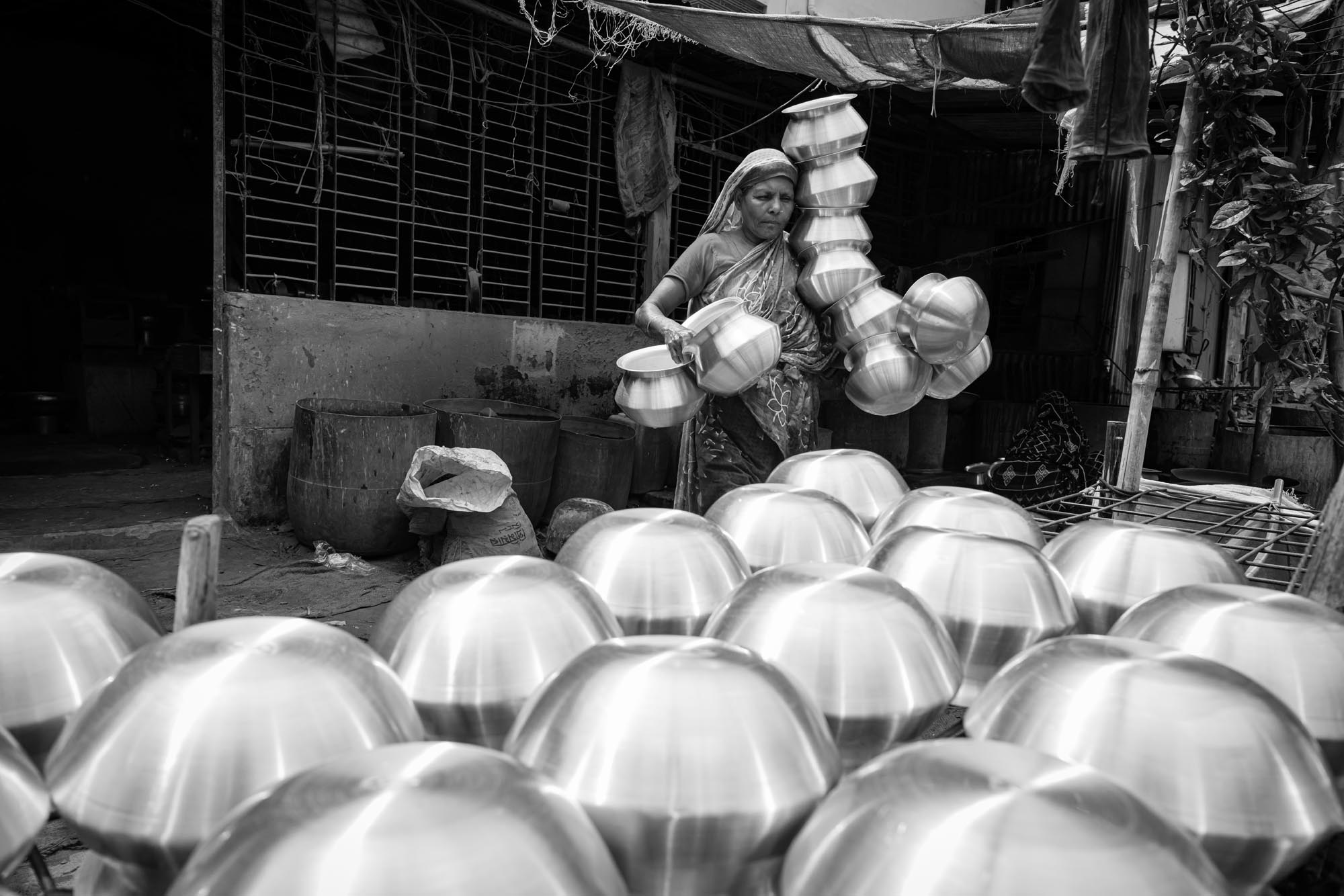
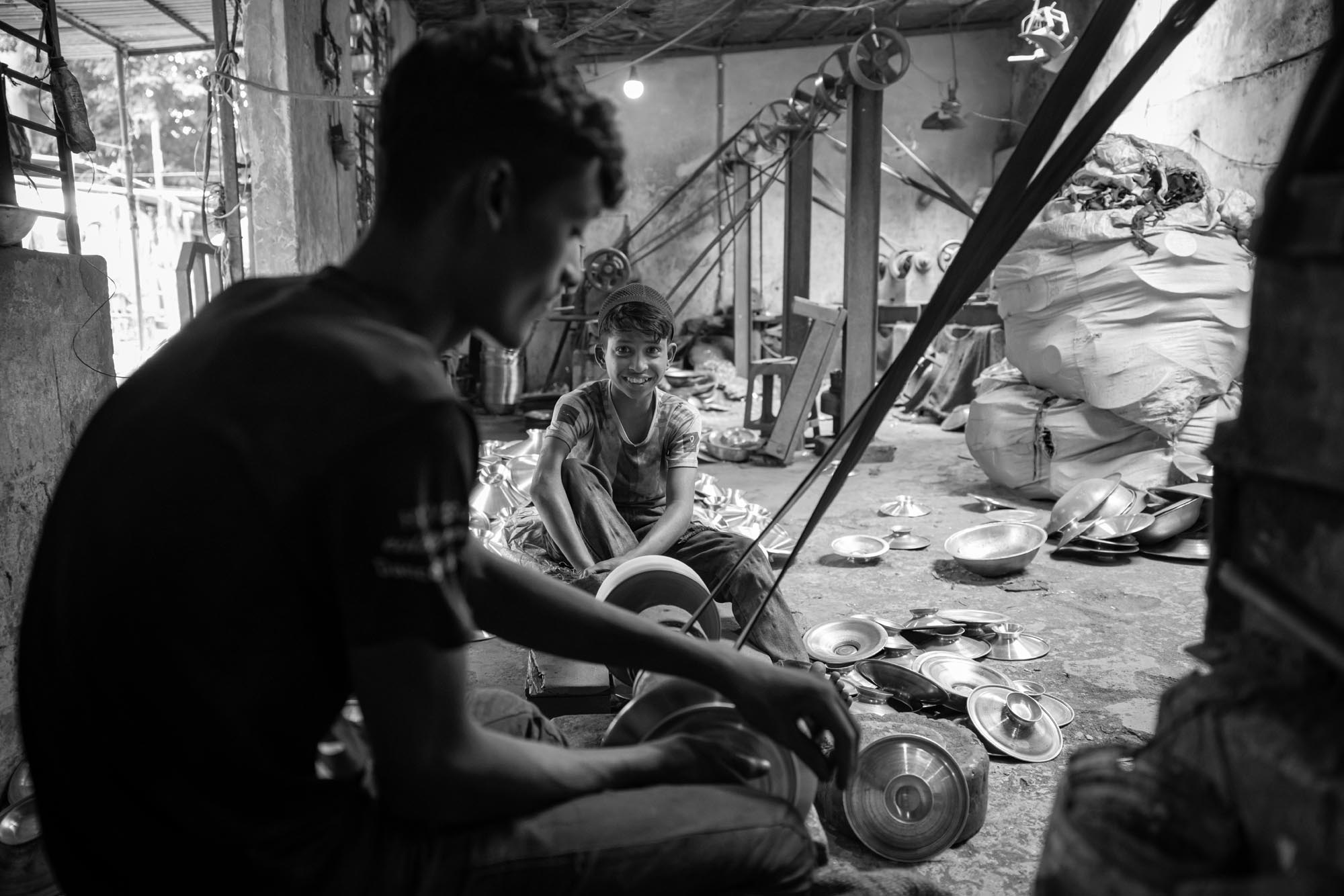
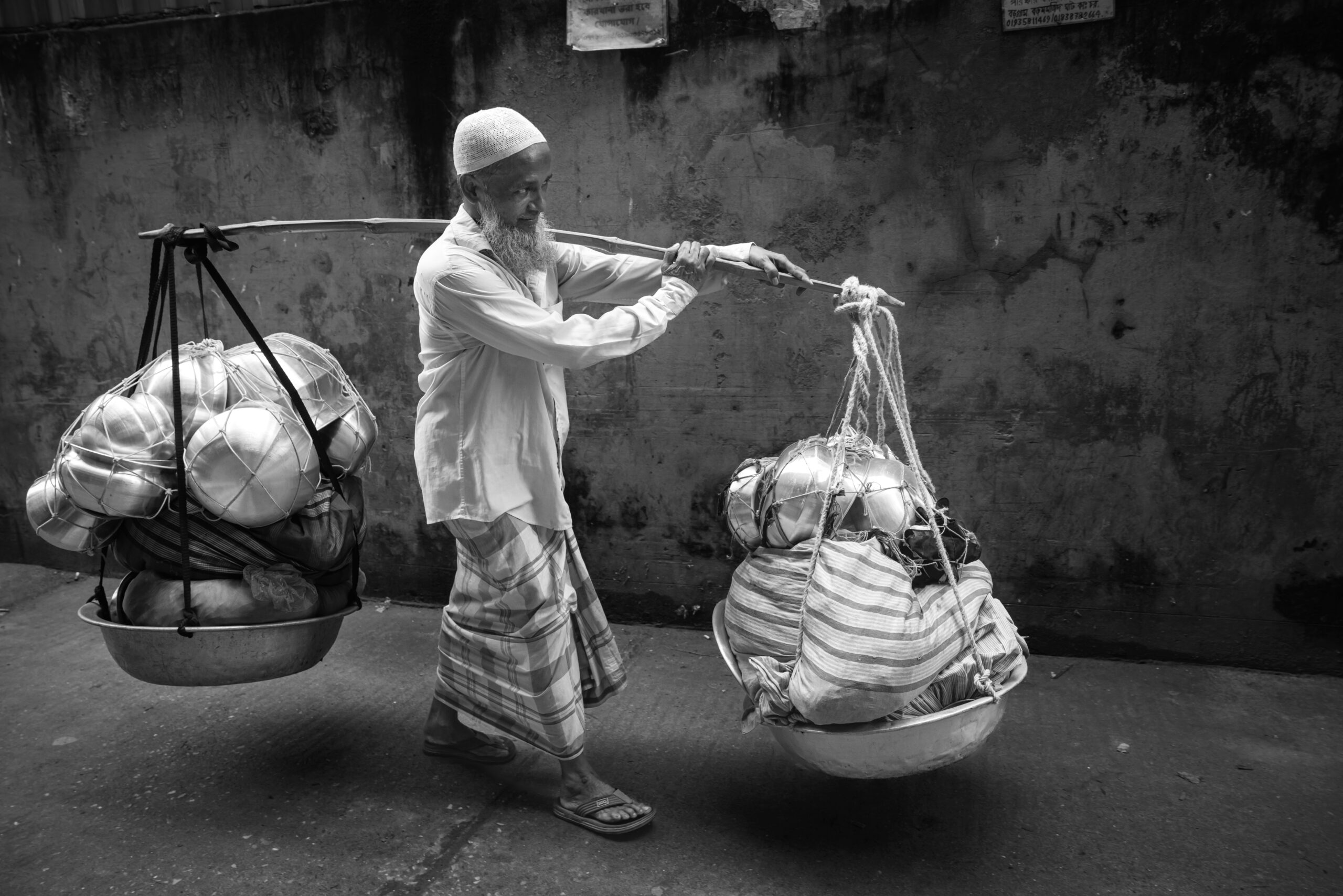
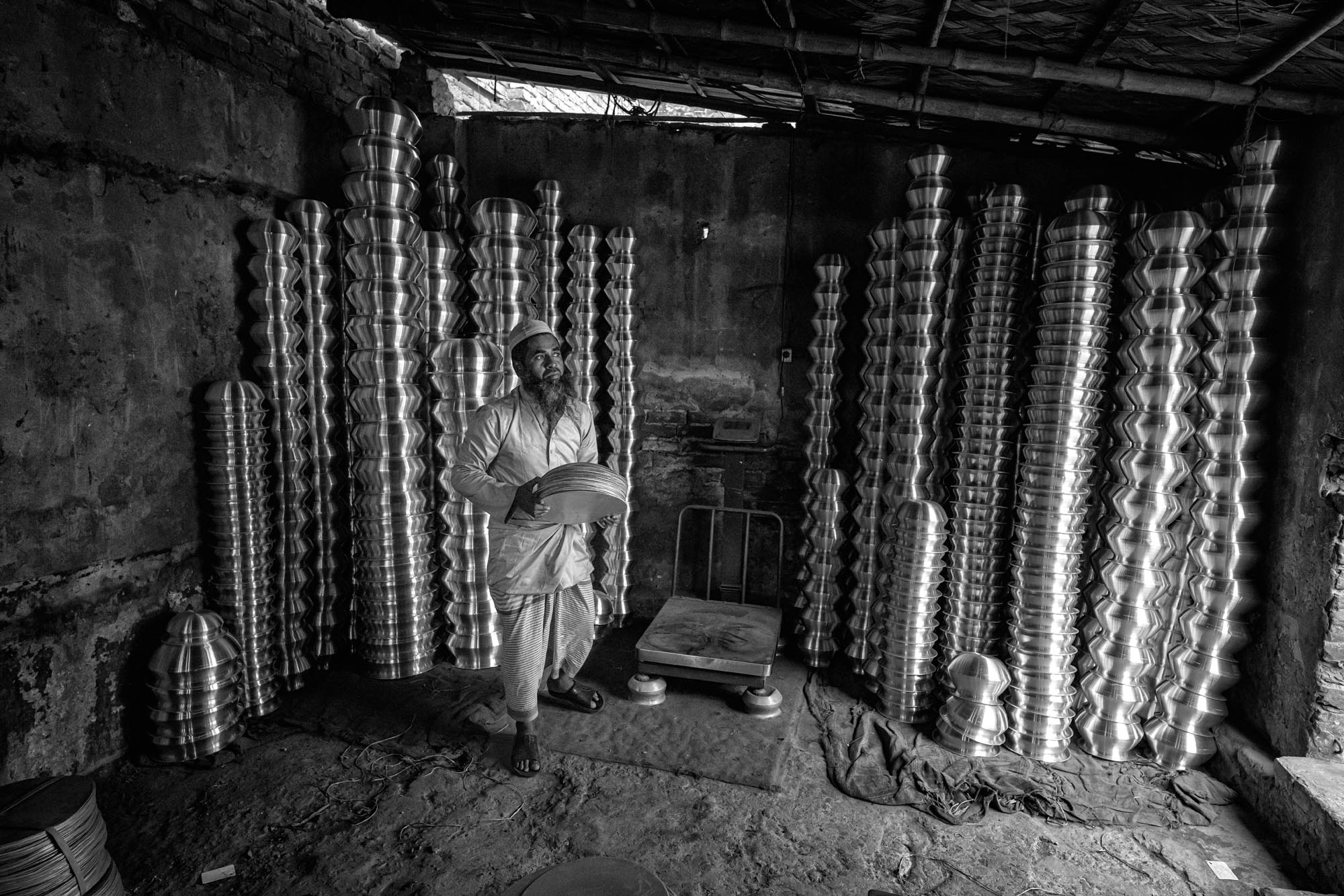
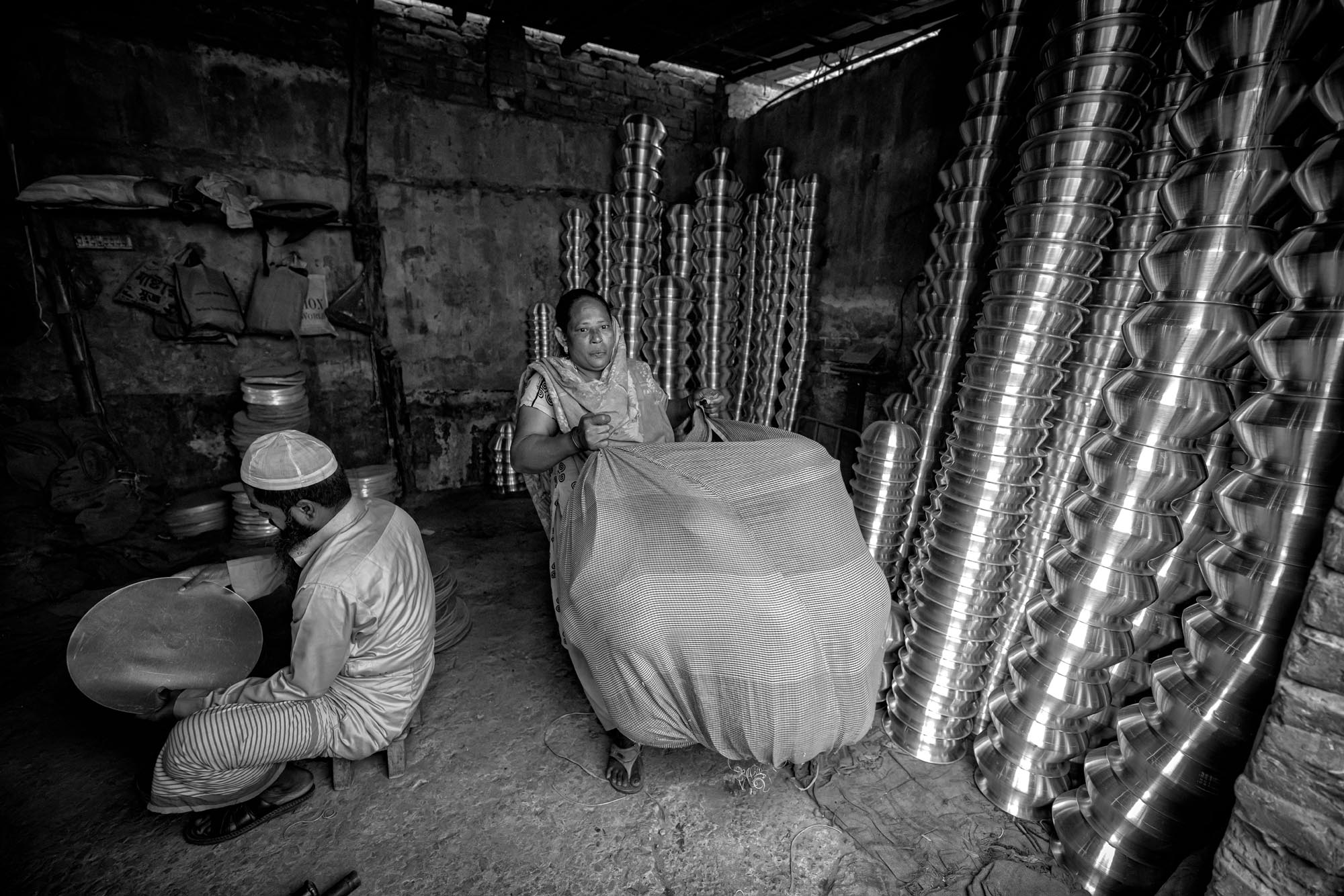
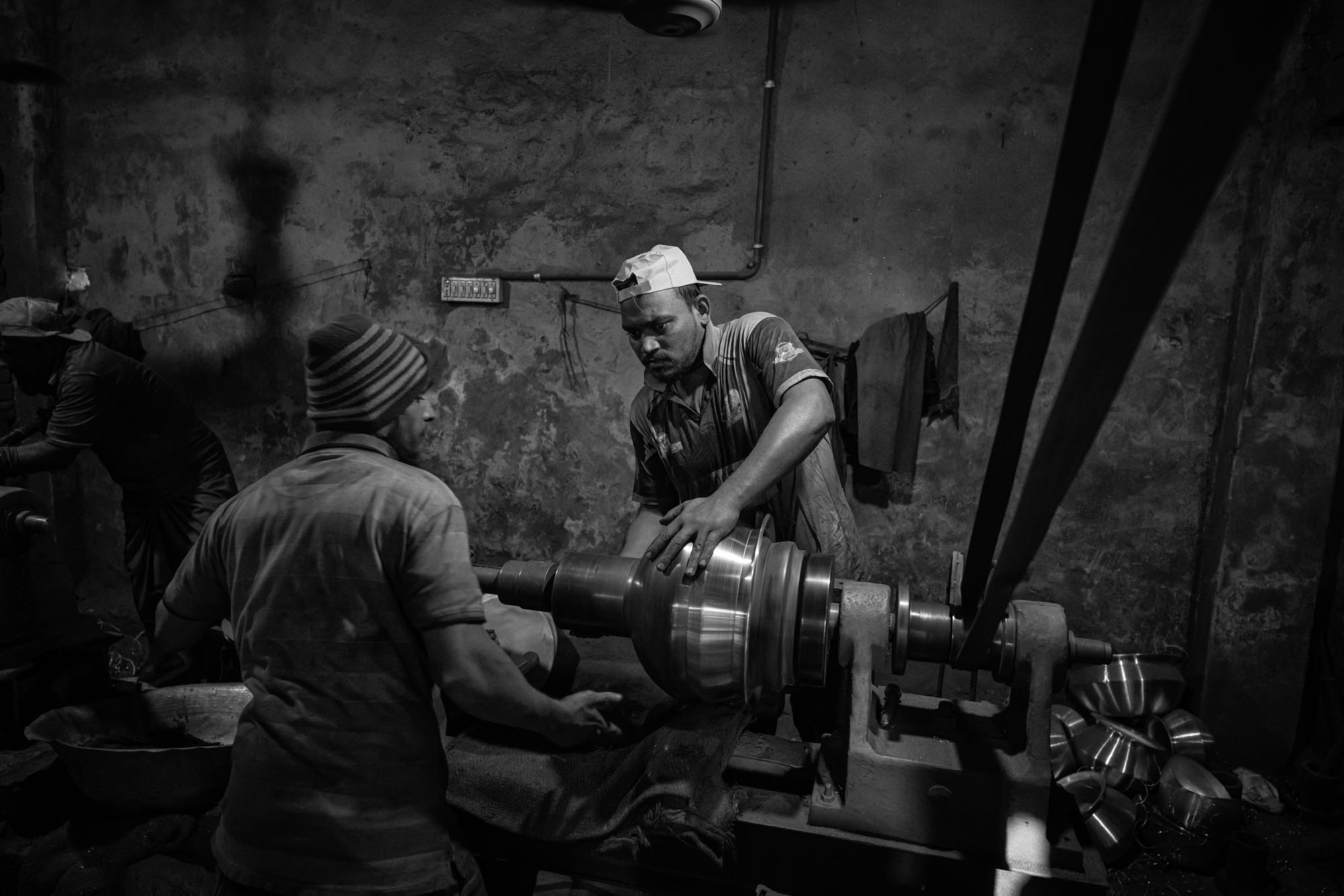
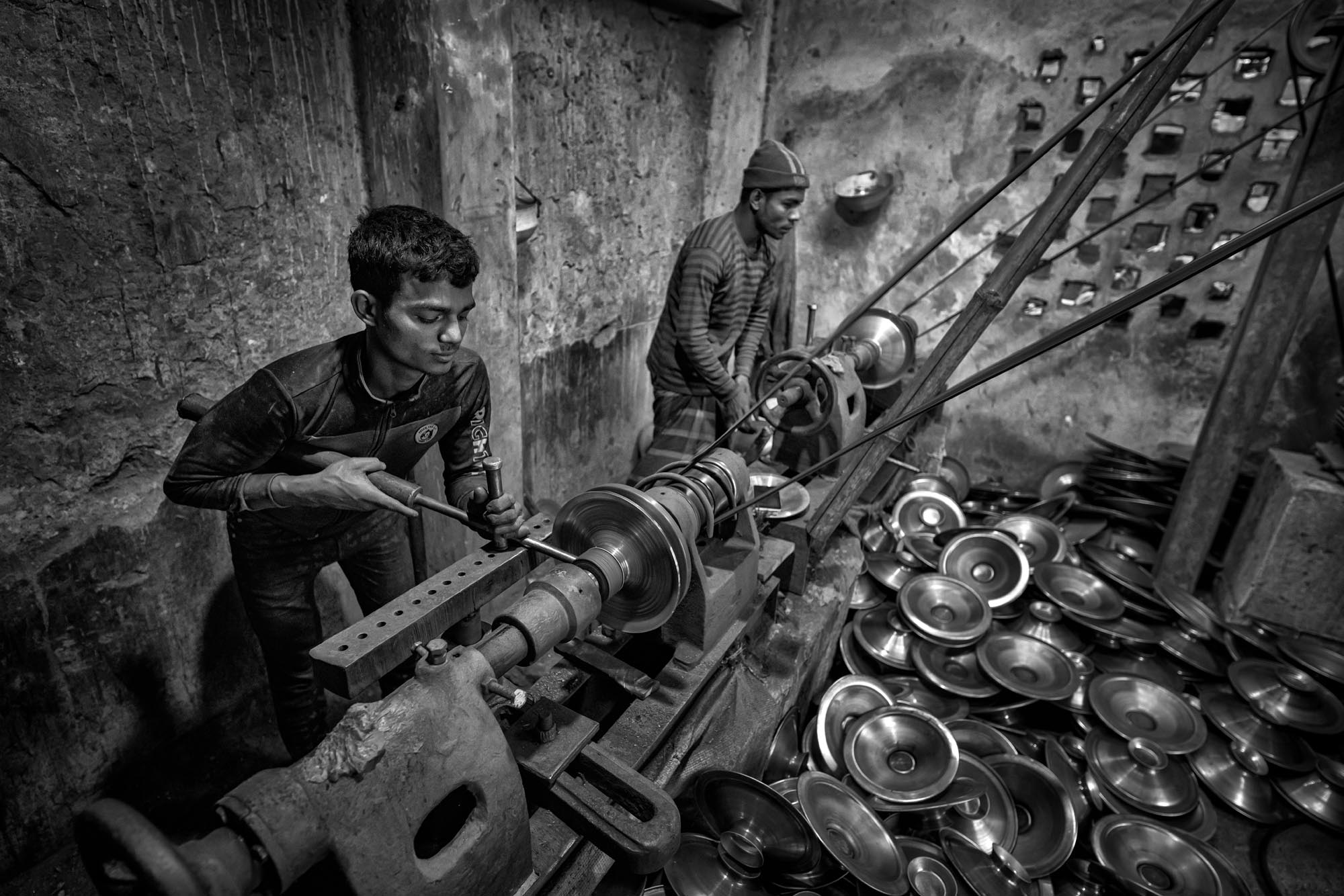
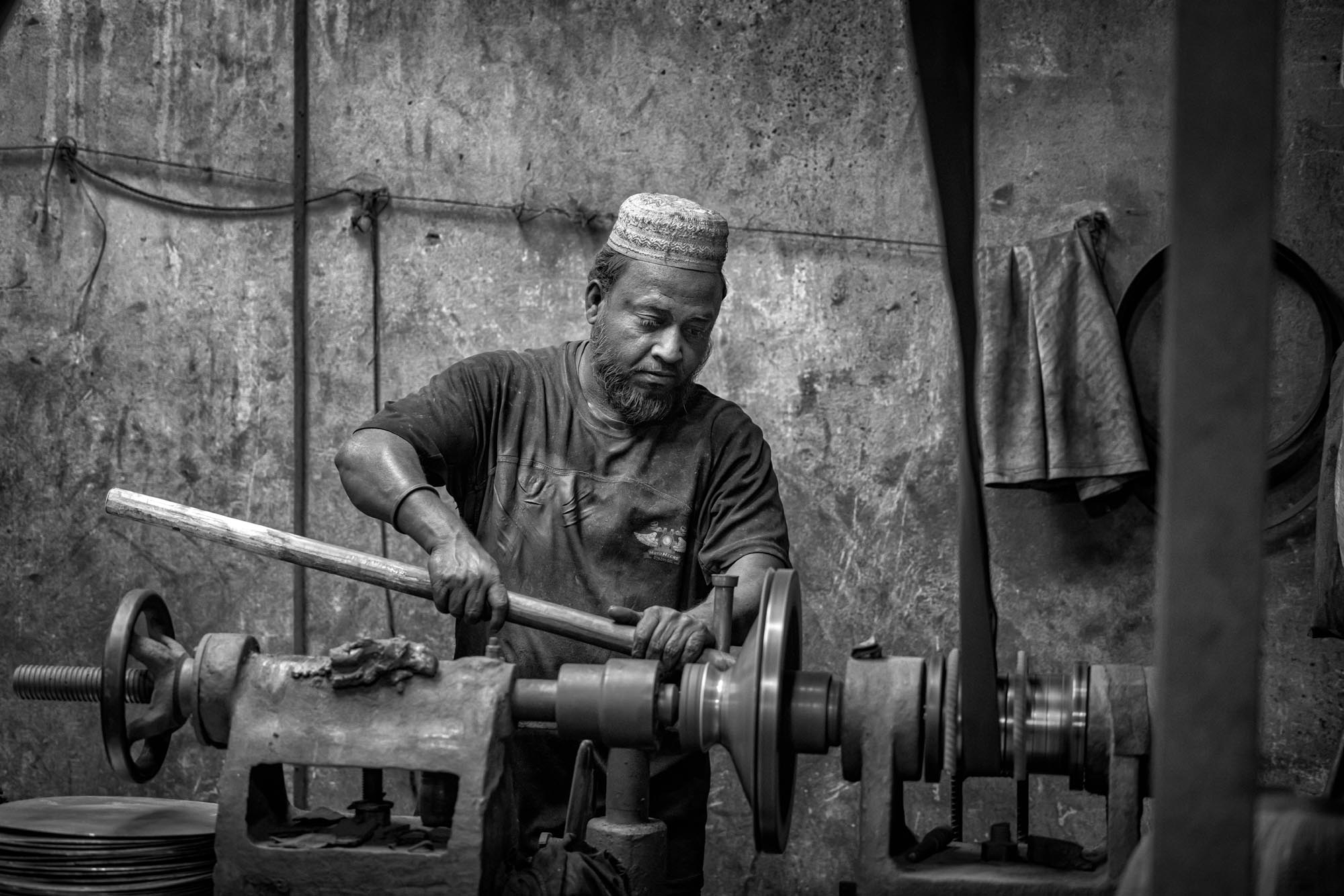
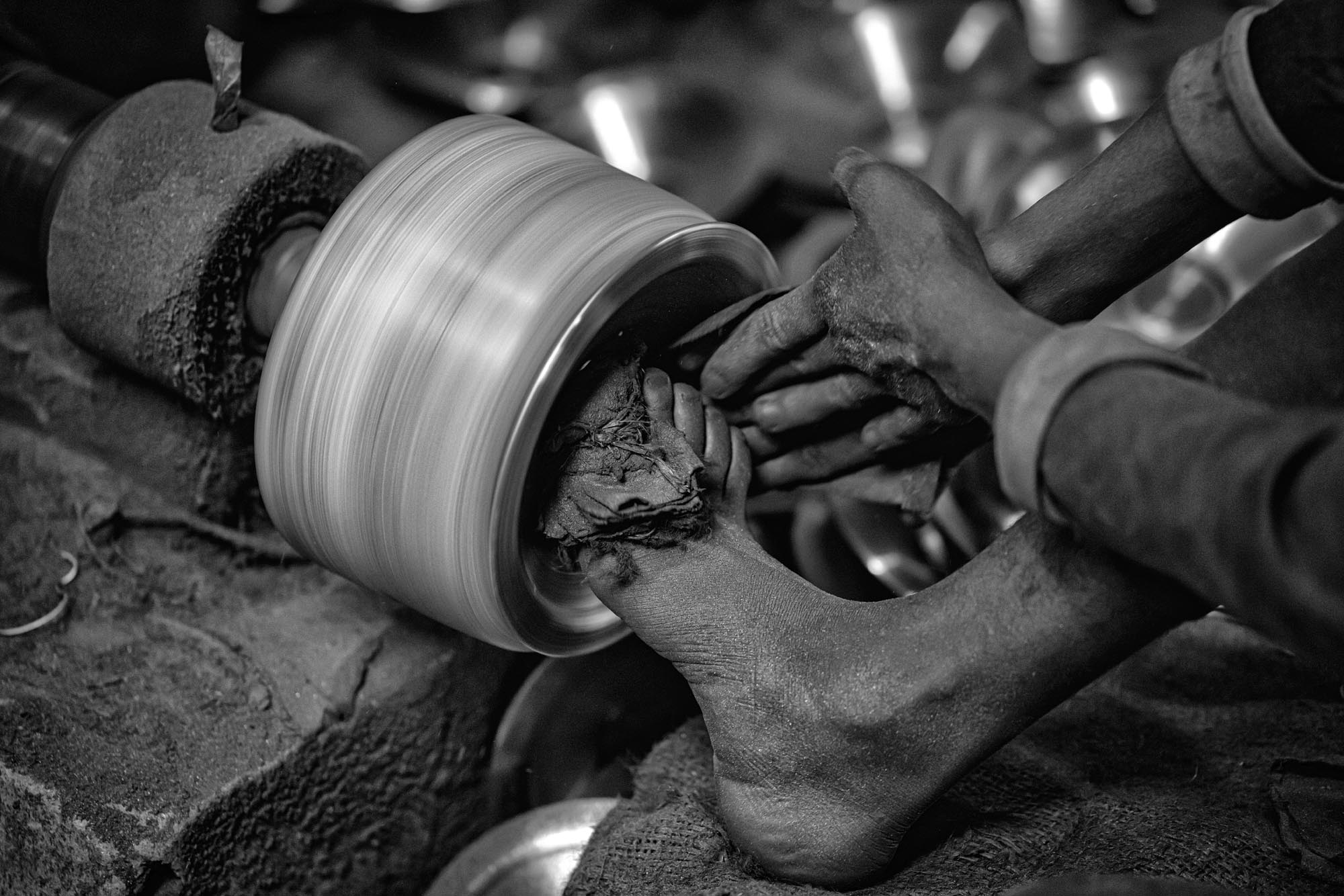
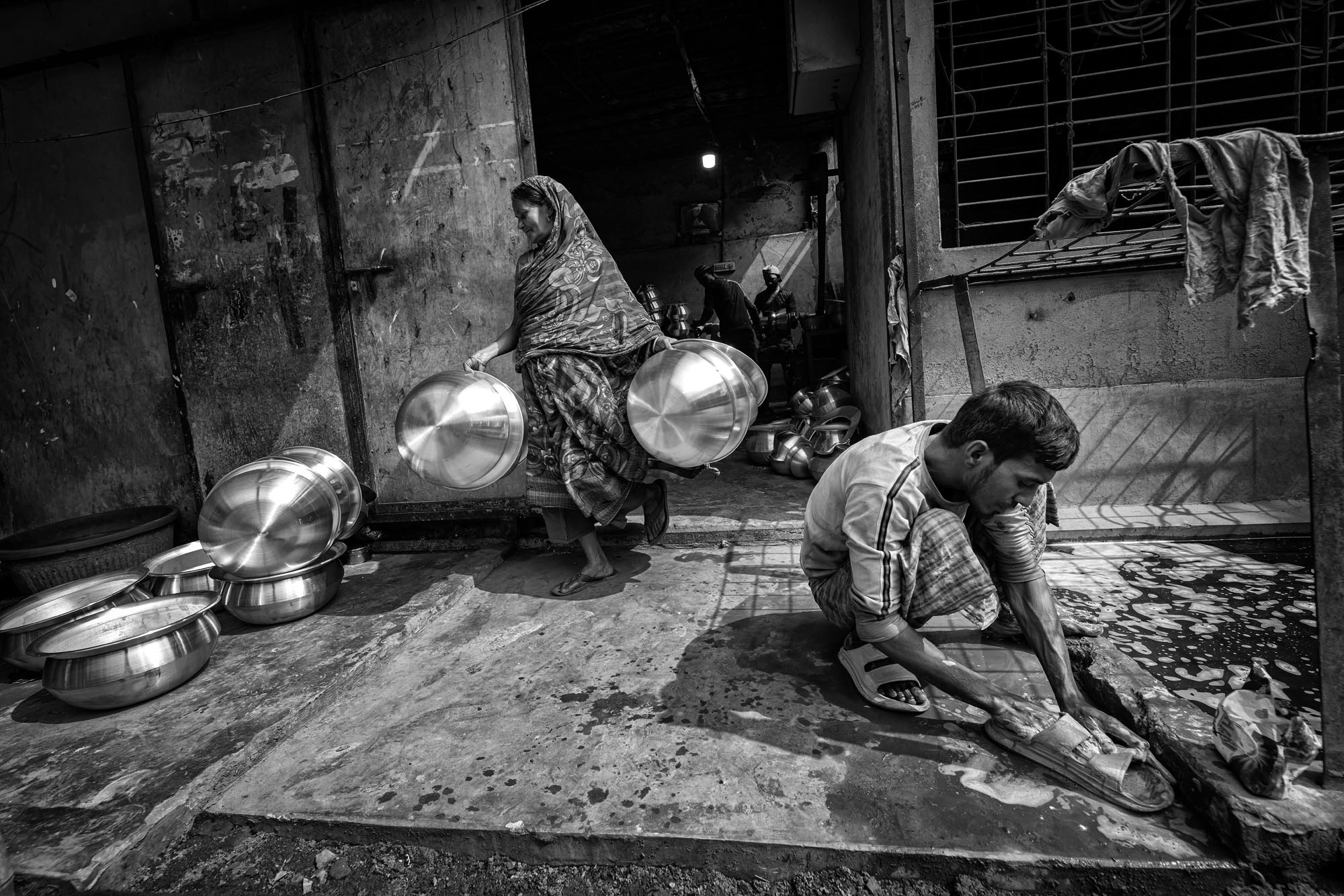
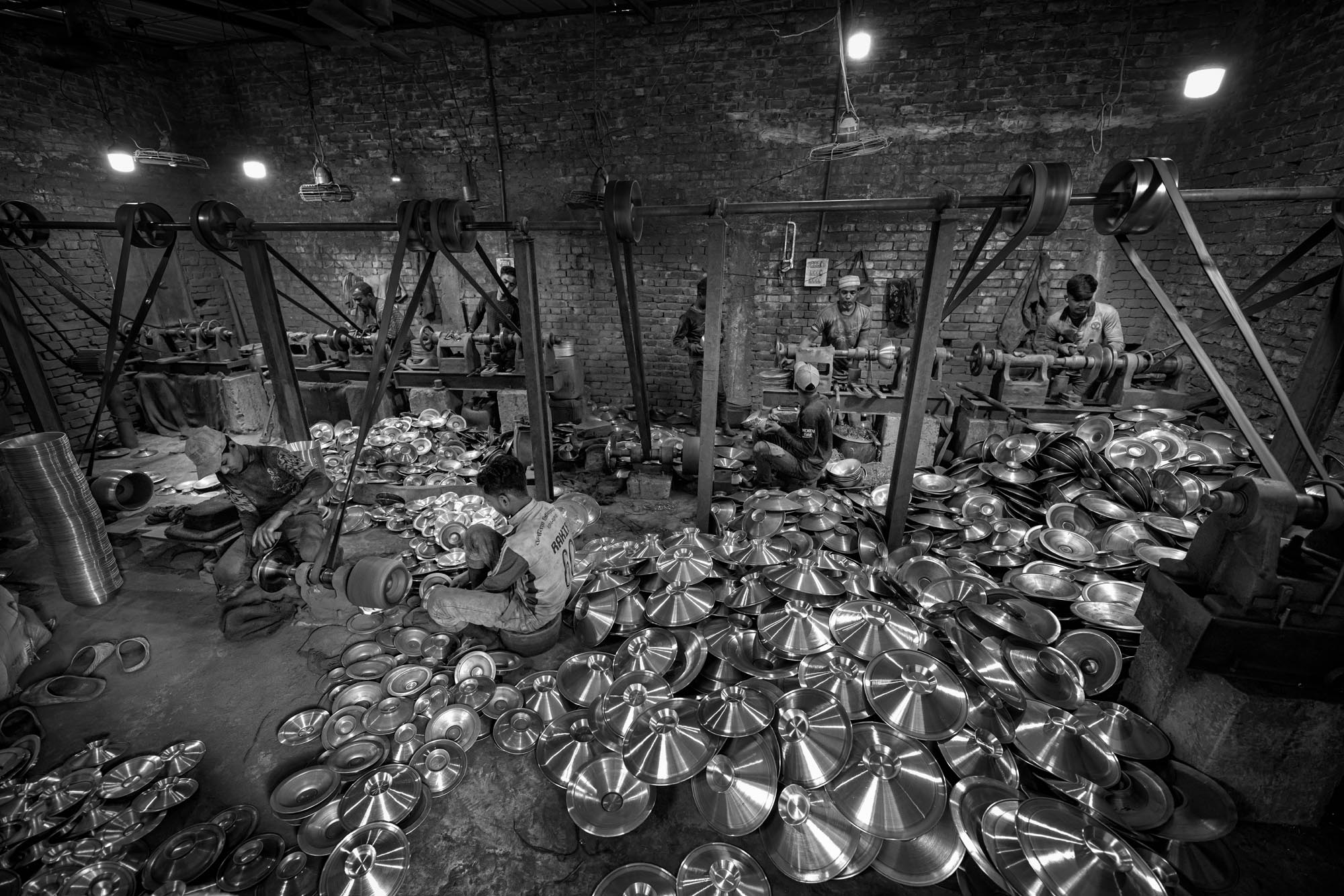
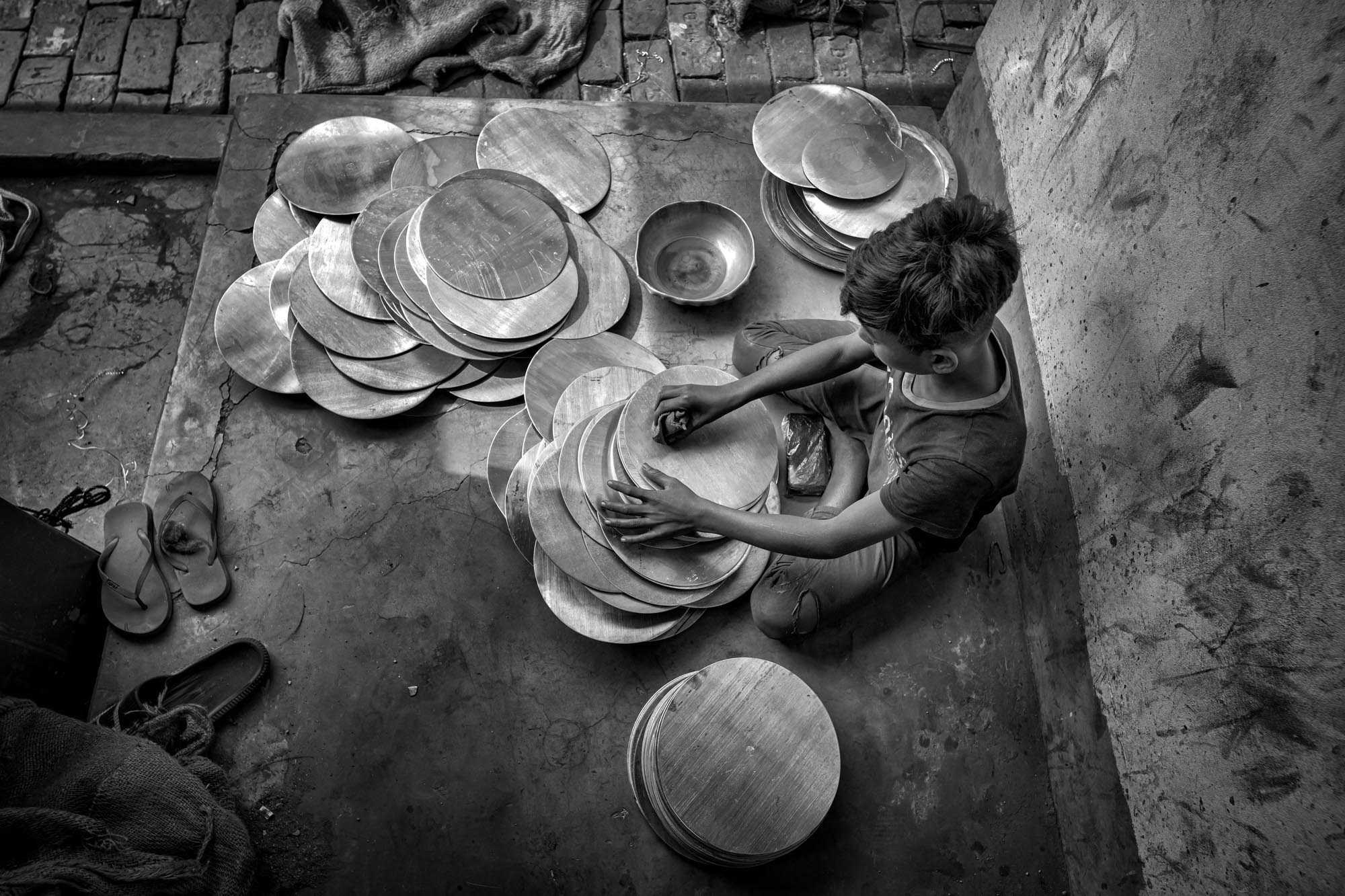
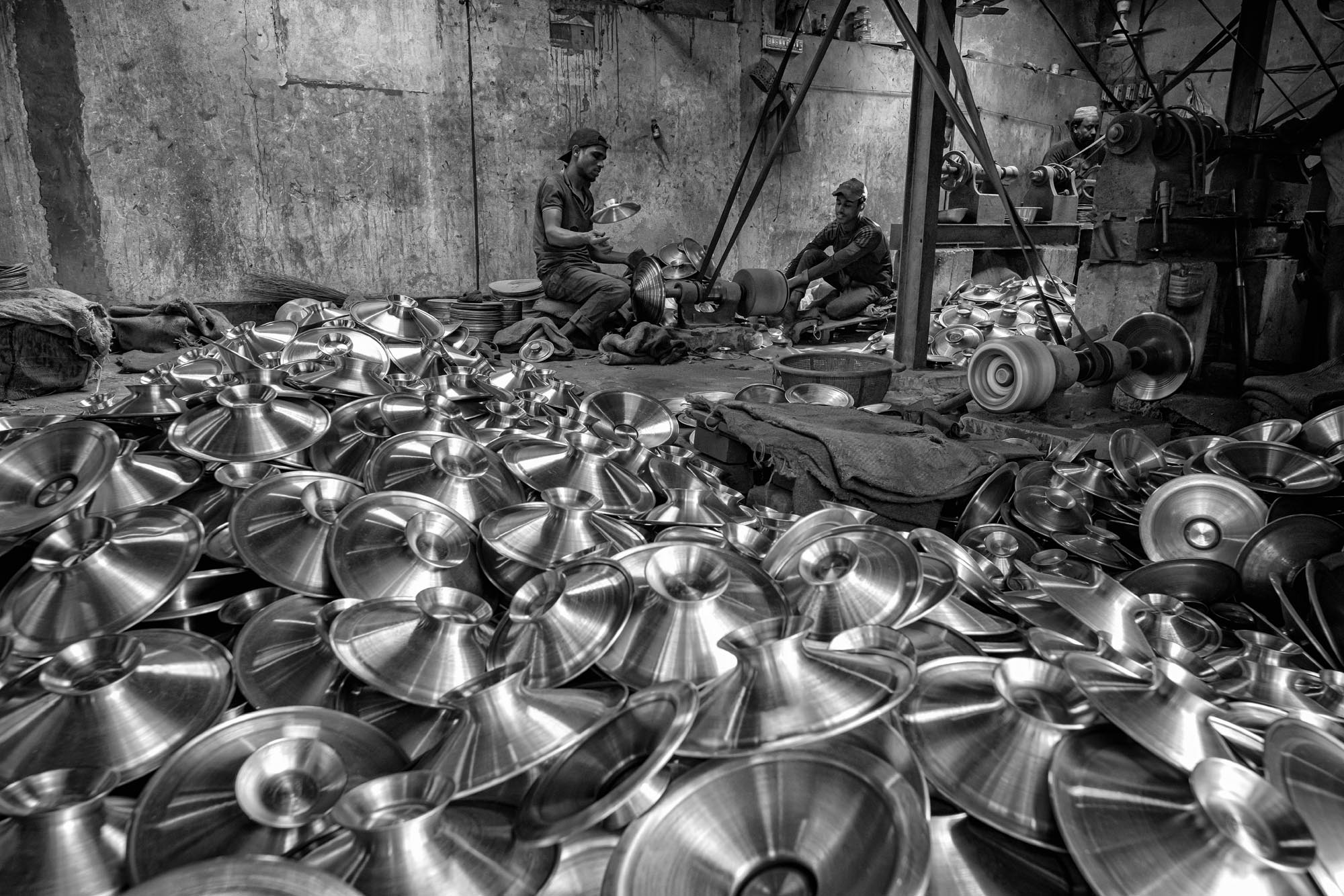
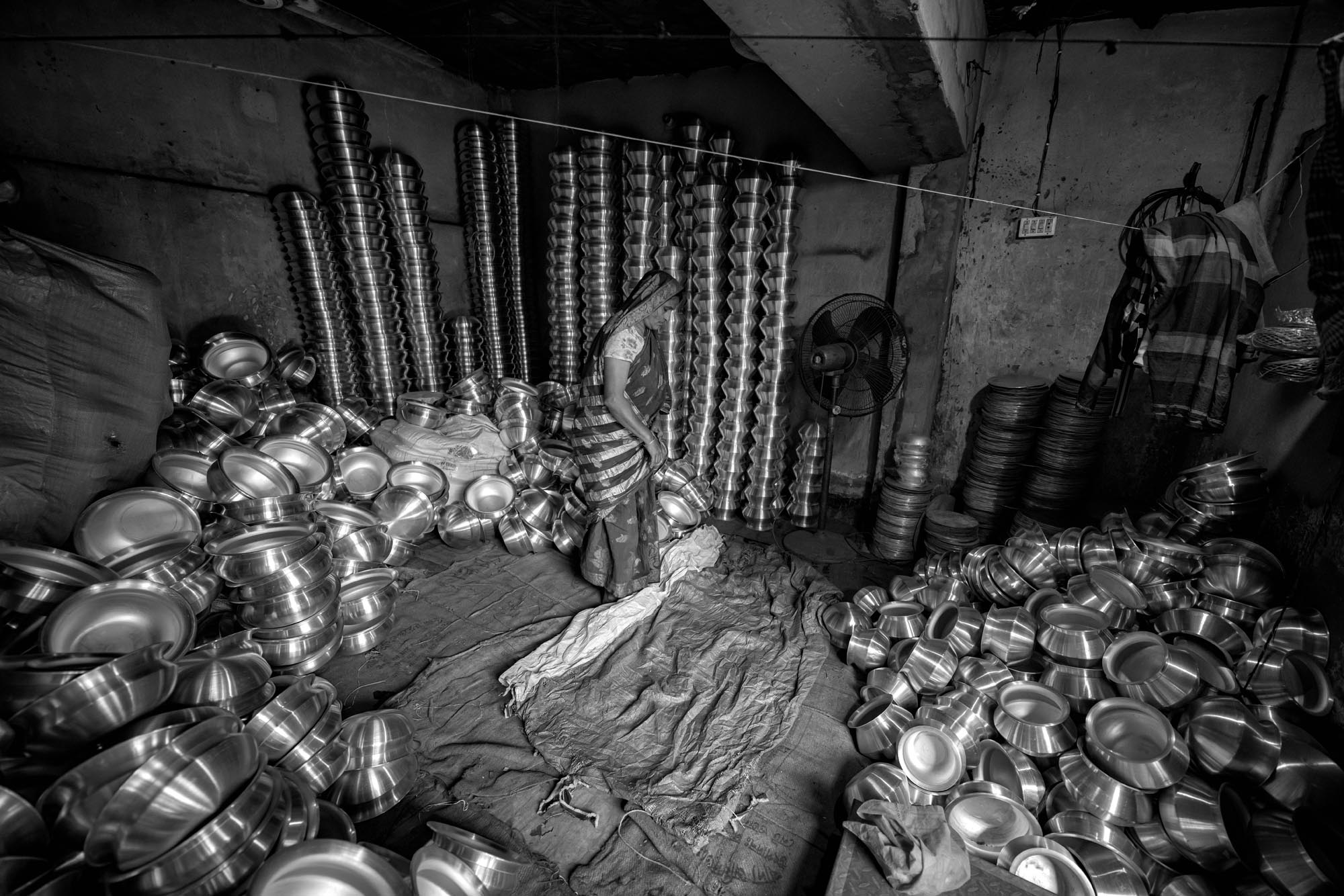
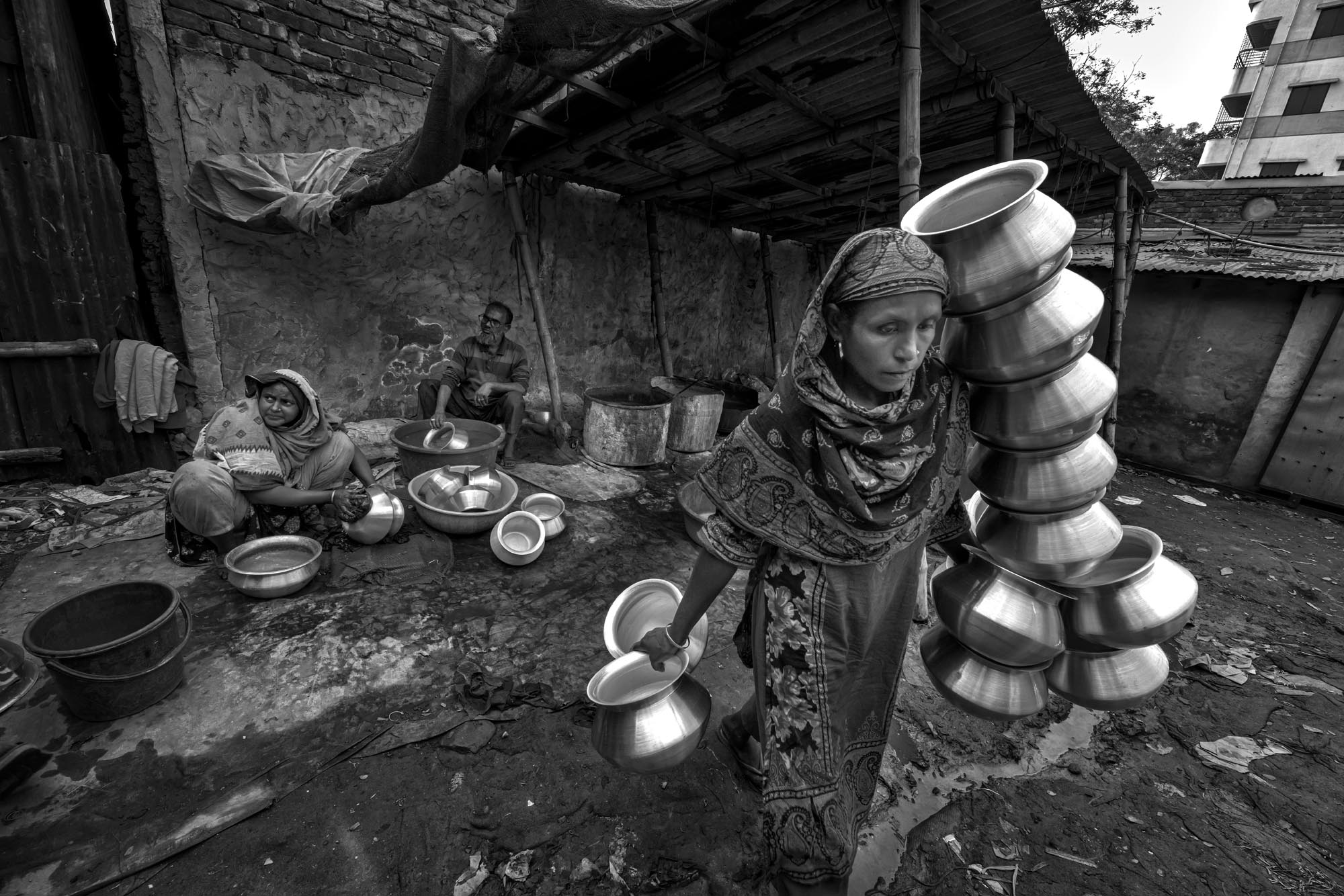
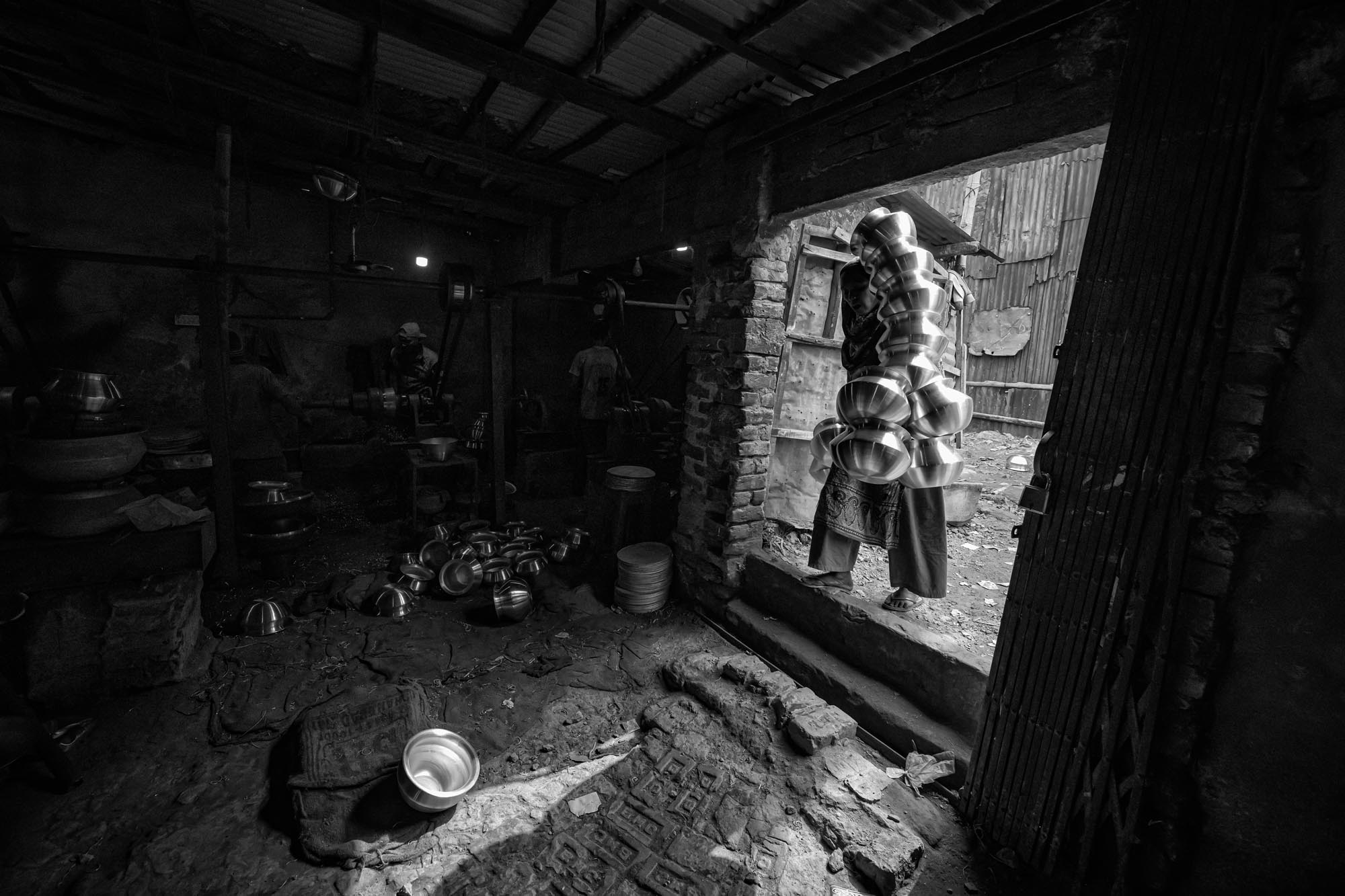
عمال من الرجال والنساء والفتيان البنغلاديشيين يعملون في مصنع لأواني الألمنيوم في احدى الضواحي العاصمة دكا. تنتشر مصانع الألمنيوم في بنغلاديش، حيث تُصنع أنواع مختلفة من الأواني والجرار من الألمنيوم. توفر هذه الصناعة فرص عمل جيدة، وكثير من هؤلاء العمال أطفال دون سن الخامسة عشرة. وقد أجرت اليونيسف ومكتب الإحصاء البنغلاديشي مؤخرًا دراسة مشتركة حول وضع عمالة الأطفال في البلاد. أظهرت الدراسة وجود ما لا يقل عن خمسة ملايين طفل تتراوح أعمارهم بين خمسة وسبعة عشر عامًا يعملون في وظائف مختلفة، منهم مليونا طفل على الأقل يعملون في أعمال خطرة.
يواجه قطاع صناعة الألومنيوم أوقاتًا عصيبة. فقد أُغلقت العديد من مصانع الألومنيوم أو نُقلت إلى مواقع أخرى، نظرًا لانخفاض استخدام أواني الألومنيوم بسبب انتشار أواني الطهي المتنوعة المصنوعة من الفولاذ المقاوم للصدأ والبلاستيك والسيراميك. ونتيجة لذلك، ترك العديد من الحرفيين هذه المهنة.
Aluminum cookware manufacturing
Bangladeshi men, women, and boys work at an aluminum cookware factory in a suburb of Dhaka, the capital. Aluminum factories are widespread in Bangladesh, producing various types of pots and pans. This industry provides good employment opportunities, and many of these workers are children under the age of 15. UNICEF and the Bangladesh Statistics Office recently conducted a joint study on child labor in the country. The study revealed that at least five million children aged five to seventeen are employed in various jobs, with at least two million of them working in hazardous conditions.
The aluminum industry is facing difficult times. Many aluminum factories have closed or relocated due to the decline in demand for aluminum cookware caused by the widespread availability of stainless steel, plastic, and ceramic cookware. As a result, many craftsmen have abandoned the profession.